

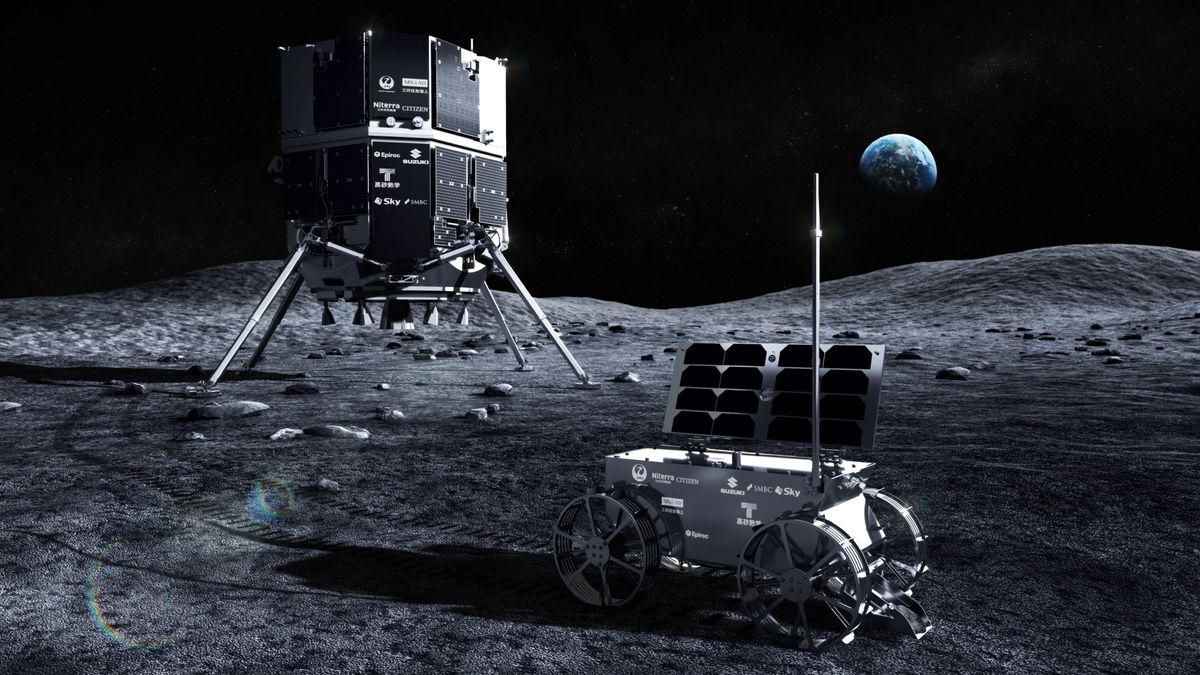
Resilience Lunar Lander: A Bold Step in Commercial Space Exploration
Japan’s private space company, ispace, is making history with its Resilience lunar lander, aiming for a touchdown in the Moon’s far north. This mission is a significant milestone in commercial spaceflight, marking Japan’s growing presence in lunar exploration.
Resilience Lunar Lander: Mission & Its Significance
Resilience is targeting Mare Frigoris, or the Sea of Cold, a stable region in the Moon’s northern hemisphere. Unlike previous missions that focused on the lunar south pole, this landing site offers safer conditions for robotic exploration.
This mission follows ispace’s first attempt in 2023, which ended in a crash landing. Learning from past challenges, the company has upgraded its navigation systems, landing software, and spacecraft design to ensure a successful touchdown.
Resilience Lunar Lander: Scientific & Commercial Goals
Onboard Resilience is a mini rover named Tenacious, designed to test surface mobility and gather scientific data. The rover will analyze soil conditions, providing crucial insights for future lunar missions.
Beyond science, ispace envisions a lunar economy, where private companies support resource mining, communication relays, and infrastructure development. This mission is a stepping stone toward sustainable lunar transportation by the 2030s.
Resilience Lunar Lander: global Impact & Future Prospects
If successful, Resilience will be Japan’s first private lunar landing, positioning ispace as a key player in commercial spaceflight. The data gathered will support NASA’s Artemis program and Japan’s collaboration with JAXA and ESA.
With plans for annual lunar missions, ispace aims to establish a permanent presence on the Moon, paving the way for future human exploration.











Leave a Reply