Solar Fruit Dryer vs Electric Fruit Dryer: Cost Comparison for Business
Fruit drying is one of the most practical ways to preserve seasonal produce, reduce post-harvest losses and create value-added food products. From dried mango and banana to apples, pineapple, tomatoes and herbs, dehydrated foods have growing applications in retail, wholesale, food manufacturing and export markets.
For entrepreneurs planning a fruit processing business, selecting the right drying technology is an important investment decision. Two popular options are solar fruit dryers and electric fruit dryers. Both remove moisture from fresh produce, but their purchase costs, operating expenses, drying speed, production capacity and suitability for commercial operations can differ significantly.
Understanding the solar fruit dryer vs electric fruit dryer cost comparison can help business owners choose equipment that matches their production requirements and budget.
A solar dryer generally uses sunlight as its primary heat source, while an electric dryer uses electrical heating elements or a heat-pump system. Solar models can reduce energy expenses, whereas electric models usually provide more consistent temperature control and predictable production schedules.
This guide compares both technologies in terms of equipment price, electricity consumption, installation, maintenance, production capacity and long-term business profitability.
1. What Is a Solar Fruit Dryer?
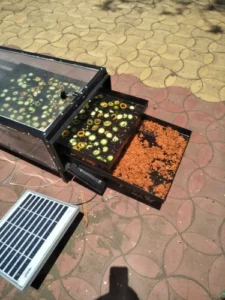
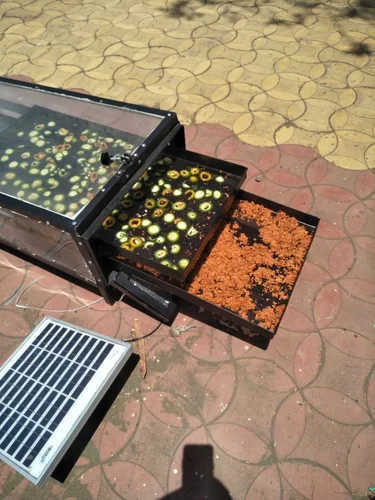
A solar fruit dryer is a food-processing machine that uses solar energy to remove moisture from fruits, vegetables, herbs and other agricultural products.
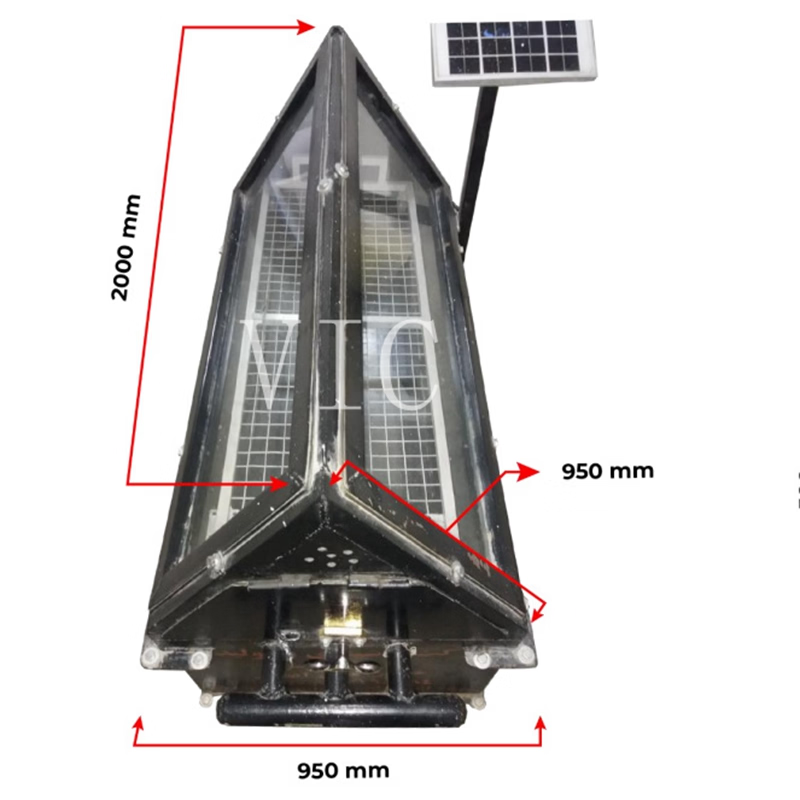
It captures sunlight through a solar collector, transparent enclosure or specially designed drying chamber. The collected heat raises the temperature inside the dryer and helps moisture evaporate from the food.
Depending on the design, air circulation may occur naturally or through solar-powered fans.
Types of Solar Fruit Dryers
1. Direct Solar Dryer
A direct solar dryer allows sunlight to enter the drying chamber and heat the products directly. It is relatively simple and can be suitable for small-scale agricultural applications.
2. Indirect Solar Dryer
An indirect solar dryer uses a separate solar collector to heat air. The heated air then moves into the drying chamber, reducing direct sunlight exposure on the food.
3. Mixed-Mode Solar Dryer
A mixed-mode dryer combines direct solar radiation with heated air from a solar collector. It can provide improved drying performance compared with basic direct solar designs.
4. Solar Dryer with Backup Heating
Some commercial solar dryers include electric or other auxiliary heating systems. These systems help maintain drying conditions when sunlight is insufficient.
Advantages of Solar Fruit Dryers
- Lower dependence on grid electricity.
- Potentially lower operating expenses.
- Uses renewable solar energy.
- Suitable for agricultural areas with good sunlight.
- Can help small businesses process seasonal fruits.
- May reduce energy-related production costs over time.
Limitations of Solar Fruit Dryers
- Drying performance depends on weather conditions.
- Cloudy days and monsoon seasons can reduce productivity.
- Drying times may be longer or less predictable.
- Temperature and humidity control can be challenging in basic models.
- Commercial production may require backup heating.
- Proper design is necessary to protect food from dust, insects and contamination.
2. What Is an Electric Fruit Dryer?
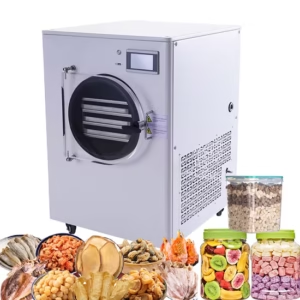
An electric fruit dryer is a food dehydration machine that uses electrical energy to generate controlled heat and circulate warm air through a drying chamber.
It is commonly used by food-processing companies, commercial kitchens, agricultural businesses, snack manufacturers and entrepreneurs producing packaged dried fruits.
Electric fruit dryers are available in different sizes, from small countertop units to large industrial dehydrators.
Types of Electric Fruit Dryers
1. Tray-Type Electric Fruit Dryer
Tray dryers contain multiple shelves or trays where sliced fruits are arranged. Warm air circulates through the chamber to remove moisture.
2. Cabinet-Type Fruit Dryer
Cabinet dryers are enclosed machines designed for small and medium-scale production. They provide organized tray loading and temperature adjustment.
3. Industrial Electric Dehydrator
Industrial dehydrators are designed for higher production volumes. They may include multiple racks, powerful fans, programmable controls and advanced temperature management.
4. Heat-Pump Fruit Dryer
Heat-pump dryers use a refrigeration-based system to remove moisture efficiently while controlling temperature and humidity. They may offer better energy performance than conventional resistance-heated systems, depending on operating conditions.
Advantages of Electric Fruit Dryers
- More consistent temperature control.
- Production is less dependent on sunlight.
- Suitable for scheduled commercial production.
- Can provide more predictable drying cycles.
- Available in different production capacities.
- Easier to standardize product quality when properly operated.
Limitations of Electric Fruit Dryers
- Electricity expenses can be significant.
- Larger machines may require substantial electrical infrastructure.
- Heating elements, fans and control systems require maintenance.
- Operating costs depend on local electricity tariffs.
- Poor insulation or inefficient airflow can increase energy consumption.
3. Solar Fruit Dryer vs Electric Fruit Dryer: Price Comparison
The purchase price is one of the first factors business owners consider when choosing a drying machine.
However, the price depends on several factors, including machine capacity, construction material, insulation, tray count, airflow design, temperature control and automation.
The following figures are illustrative planning ranges for the Indian market, not verified live quotations. Actual prices may vary considerably between manufacturers and machine specifications.
Estimated Machine Price in India
| Machine category | Indicative price range |
|---|---|
| Small solar fruit dryer | ₹5,000–₹25,000 |
| Medium solar fruit dryer | ₹25,000–₹1,00,000 |
| Commercial solar dryer | ₹1,00,000–₹5,00,000+ |
| Small electric fruit dryer | ₹5,000–₹20,000 |
| Medium electric fruit dryer | ₹20,000–₹75,000 |
| Commercial electric fruit dryer | ₹75,000–₹3,00,000+ |
| Industrial electric fruit dryer | ₹3,00,000–₹15,00,000+ |
These ranges are not direct like-for-like comparisons. A basic solar cabinet and an automated industrial electric dehydrator have very different capabilities.
Before purchasing, request quotations that specify usable tray area, fresh-product capacity per batch, drying temperature range, power consumption, construction material and warranty.
Which Machine Has a Lower Purchase Cost?
A basic solar fruit dryer can be inexpensive because it may not require electrical heating equipment. However, a commercial solar dryer with a large collector, insulated chamber, fans and backup heating can require a substantial investment.
Small electric dehydrators are also available at affordable prices. Industrial electric machines cost more because of their higher capacity, stronger construction and automation.
The right comparison is therefore based on equipment with similar production capacity and product-quality requirements, not simply the lowest advertised price.
4. Operating Cost Comparison
The biggest difference between solar and electric drying systems is often their energy requirement.
A solar fruit dryer uses sunlight as its main heat source, so its direct energy expense can be relatively low. An electric fruit dryer requires electricity to operate its heating system and fans.
However, solar dryers may also require electricity for ventilation, controls or backup heating.
Solar Fruit Dryer Operating Costs
Typical operating expenses may include:
- Cleaning and sanitation.
- Labour for loading and unloading.
- Maintenance of collectors and drying chambers.
- Replacement of fans or ventilation components.
- Backup heating, where installed.
- Packaging and storage of finished products.
A basic solar dryer may have very low energy costs, but labour and weather-related production delays should be considered.
Electric Fruit Dryer Operating Costs
Electric fruit dryer expenses generally include:
- Electricity consumption.
- Labour costs.
- Equipment maintenance.
- Fan and heating-element replacement.
- Cleaning and sanitation.
- Packaging and storage.
Electricity consumption depends on the heating technology, machine insulation, product moisture content, loading quantity, drying temperature and drying duration.
How to Calculate Electricity Cost
Use this formula:
Electricity Cost = Power Consumption (kW) × Operating Hours × Electricity Tariff
For example, assume a commercial electric dryer has an average electrical load of 5 kW and operates for 8 hours.
At an illustrative electricity tariff of ₹8 per unit:
5 kW × 8 hours × ₹8 = ₹320 per batch.
This is an example, not a measured consumption figure. Actual consumption may be lower or higher depending on the machine’s duty cycle and operating conditions.
Example: Solar vs Electric Operating Expenses
| Cost factor | Solar fruit dryer | Electric fruit dryer |
|---|---|---|
| Main energy source | Sunlight | Electricity |
| Energy expense | Usually low | Depends on power consumption |
| Backup energy | May be required | Usually not required |
| Weather dependency | High for basic models | Low |
| Labour requirement | Depends on design | Depends on automation |
| Production scheduling | Weather-dependent | More predictable |
| Maintenance | Collector, chamber and fans | Heating system, fans and controls |
A solar dryer may have lower energy costs, but that does not automatically mean it has the lowest total production cost. A business should calculate cost per kilogram of saleable dried product.
5. Drying Time and Production Capacity
Drying speed directly affects business productivity. A machine that completes more batches in a given period may generate higher production output, provided product quality remains consistent.
Solar Fruit Dryer
Solar drying performance depends on:
- Sunlight intensity.
- Outdoor temperature.
- Relative humidity.
- Airflow.
- Solar collector efficiency.
- Fruit thickness and moisture content.
- Product loading quantity.
During sunny conditions, a properly designed solar dryer can deliver useful production results. However, cloudy weather and high humidity can extend drying time.
Electric Fruit Dryer
Electric fruit dryers can provide more controlled drying conditions because they are less dependent on outdoor weather.
Their production performance depends on:
- Heating capacity.
- Fan airflow.
- Tray arrangement.
- Temperature uniformity.
- Humidity removal.
- Fruit preparation and slice thickness.
For commercial businesses, predictable drying cycles can make production planning, packaging schedules and customer deliveries easier.
Which Dryer Is Better for Large-Scale Production?
Electric industrial dryers are often more suitable when businesses require regular production throughout the year.
Solar dryers may be suitable for small and medium-scale production, especially in regions with reliable sunlight. Commercial solar systems with backup heating can also support larger operations, but their actual performance must be evaluated through capacity and seasonal testing.
6. Product Quality Comparison
The purpose of fruit dehydration is not simply to remove moisture. The process should also preserve desirable colour, texture, flavour and food safety.
Quality Factors in Solar Drying
Solar drying can produce good-quality dried fruits when temperature, airflow, hygiene and drying conditions are properly controlled.
However, direct sunlight exposure and fluctuating temperatures may affect sensitive products. Indirect solar drying can help reduce direct exposure.
Quality Factors in Electric Drying
Electric drying allows operators to control temperature more consistently. This can be useful for products that require specific processing conditions.
A properly designed electric dryer can support repeatable batches and standardized production.
Important Quality Parameters
Businesses should monitor:
- Final moisture content.
- Water activity.
- Colour and appearance.
- Texture and consistency.
- Flavour and aroma.
- Microbiological safety.
- Packaging integrity.
- Shelf-life performance.
The ideal final moisture content is product-specific. Water activity is particularly important because moisture percentage alone does not fully determine microbial stability.
Neither solar nor electric drying automatically guarantees superior quality. Product preparation, temperature control, sanitation and packaging are equally important.
7. Installation and Maintenance Cost
Installation and maintenance costs should be included when comparing equipment investments.
Solar Fruit Dryer Installation
Solar dryers may require:
- Suitable outdoor space.
- Proper solar collector orientation.
- A stable installation platform.
- Ventilation and drainage arrangements.
- Weather protection.
- Electrical connections for fans or backup systems, where applicable.
The solar collector should be positioned to receive adequate sunlight. Dust accumulation and damaged transparent covers can reduce performance.
Electric Fruit Dryer Installation
Electric dryers may require:
- Suitable electrical connections.
- Adequate power supply.
- Proper earthing and electrical protection.
- Ventilation around the equipment.
- Stable flooring.
- Space for loading and unloading trays.
Larger industrial models may require three-phase electricity and additional electrical infrastructure.
Maintenance Comparison
| Maintenance factor | Solar dryer | Electric dryer |
|---|---|---|
| Cleaning | Regular | Regular |
| Airflow system | Check fans and vents | Check fans and vents |
| Heating system | Inspect collector and backup heater | Inspect heating elements or heat pump |
| Insulation | Inspect chamber | Inspect chamber |
| Electrical components | Depends on design | Important |
| External exposure | Higher for outdoor systems | Usually lower |
A preventive maintenance schedule can reduce downtime and help extend machine life.
8. Total Cost of Ownership: Which Is More Economical?
A machine’s purchase price does not tell the complete financial story.
Total cost of ownership includes:
- Initial machine investment.
- Installation expenses.
- Energy consumption.
- Labour expenses.
- Maintenance and repairs.
- Production downtime.
- Financing costs, where applicable.
- Product losses and rejected batches.
For example, a solar dryer may cost more initially than a basic electric dryer but save money on energy over time. On the other hand, if cloudy weather causes production delays, the business may lose sales or need an additional backup system.
An electric dryer may have higher energy expenses but offer more predictable production.
Cost Per Kilogram of Dried Fruit
One useful way to compare machines is to calculate the processing cost per kilogram of saleable dried fruit.
Processing Cost per kg = Total Batch Processing Cost ÷ Saleable Dried Product (kg)
Include energy, labour, maintenance allocation and other production expenses in the batch cost.
For a fair comparison, process the same fruit using similar preparation methods and target product specifications. Record fresh input weight, dried output weight, total processing time, energy use and rejected product.
This provides a more meaningful comparison than looking at electricity bills alone.
9. Which Dryer Is Better for Different Fruit Products?
Different fruits have different moisture levels, textures and drying requirements.
| Fruit product | Solar dryer suitability | Electric dryer suitability |
|---|---|---|
| Dried mango | Good with controlled indirect drying | Very good |
| Dried banana | Good in suitable weather | Very good |
| Dried pineapple | Good with adequate drying time | Very good |
| Dried apple | Good with suitable airflow | Very good |
| Dried papaya | Good with controlled conditions | Very good |
| Dried jackfruit | Depends on humidity and airflow | Very good |
| Dried tomato | Good in sunny regions | Very good |
| Dried guava | Good with proper preparation | Very good |
These are general suitability indications, not guaranteed processing results. Actual drying performance should be tested for each fruit variety, slice thickness and desired finished-product specification.
10. Business Opportunities with Solar and Electric Fruit Dryers
Both technologies can support profitable food-processing businesses when the entrepreneur has reliable raw material supplies, good processing practices and access to customers.
1. Dried Fruit Manufacturing Business
Entrepreneurs can manufacture dried mango, banana, pineapple, apple, papaya and other fruit products for retail and wholesale markets.
2. Private-Label Dried Fruit Business
Businesses can manufacture products for retailers and distributors under their own brands or provide contract manufacturing services.
3. Wholesale Dried Fruit Supply
Dried fruit products can be supplied to supermarkets, grocery stores, bakeries, hotels, restaurants and food manufacturers.
4. Fruit Processing for Farmers
A fruit-drying facility can purchase seasonal surplus produce from farmers and convert it into products with longer storage potential.
5. Export-Oriented Food Processing
Businesses may explore international markets for dried fruit products. Export operations require suitable food-safety systems, traceability, product testing, compliant packaging and destination-country regulatory checks.
6. Solar Food Processing
Entrepreneurs in sunny agricultural regions can explore solar drying as a way to reduce dependence on conventional energy sources. Hybrid systems can provide additional flexibility.
11. How to Choose the Right Fruit Dryer for Your Business
Before purchasing a machine, evaluate your production requirements carefully.
Step 1: Determine Daily Production Capacity
Estimate how many kilograms of fresh fruit you want to process daily. Remember that fresh fruit loses a substantial amount of weight during drying.
Step 2: Check Local Weather Conditions
If your location has strong sunlight for most of the year, a solar fruit dryer may be a suitable option.
If production must continue during monsoon periods or cloudy weather, an electric or hybrid dryer may be more appropriate.
Step 3: Compare Energy Expenses
Request actual power consumption information from electric dryer manufacturers. For solar models, ask whether fans, controls or backup heating require electricity.
Step 4: Evaluate Product Quality Requirements
If your business needs consistent colour, texture and moisture specifications, prioritize accurate temperature control, airflow distribution and monitoring features.
Step 5: Check Machine Construction
Look for food-grade contact surfaces, durable trays, suitable insulation, easy cleaning and corrosion-resistant materials.
Step 6: Ask for a Product Trial
Ask the supplier to demonstrate drying using the fruit you plan to process. A trial can reveal practical differences in drying time, output quality and energy consumption.
Step 7: Compare Warranty and After-Sales Support
Check warranty coverage, spare-part availability, installation assistance and technical support.
Step 8: Calculate Return on Investment
Estimate monthly production, selling price, raw material cost, packaging expenses, labour, utilities and maintenance before deciding.
12. Solar Fruit Dryer vs Electric Fruit Dryer: Final Verdict
The best machine depends on the size of your business, location, available energy, production schedule and product-quality requirements.
A solar fruit dryer is worth considering when:
- You operate in a sunny region.
- Your production schedule is flexible.
- You want to reduce conventional energy consumption.
- Your production volume is small or moderate.
- You have sufficient space for solar equipment.
An electric fruit dryer is worth considering when:
- You need predictable production schedules.
- You want consistent temperature control.
- You operate throughout the year.
- Your customers require standardized products.
- You have access to a reliable electricity supply.
A hybrid solar-electric dryer can be a practical middle ground. It uses solar energy when conditions are suitable and backup heating when required.
For many commercial food processors, the most economical choice is the machine that produces the required quantity of saleable dried fruit at the lowest total cost while meeting quality and food-safety requirements.
13. Frequently Asked Questions
1. Which is cheaper, a solar fruit dryer or an electric fruit dryer?
A basic solar fruit dryer can have low operating expenses because it uses sunlight. However, purchase prices vary according to size and design. Electric dryers may be affordable at small capacities but usually have ongoing electricity expenses.
2. What is the price of a solar fruit dryer in India?
Small solar fruit dryers may cost approximately ₹5,000–₹25,000, while larger commercial systems can cost ₹1,00,000 or more. These are indicative planning ranges, not verified supplier quotations.
3. What is the price of an electric fruit dryer in India?
Small electric fruit dryers may cost approximately ₹5,000–₹20,000. Commercial and industrial models can cost substantially more depending on capacity, construction and automation.
4. Is a solar fruit dryer suitable for commercial production?
Yes. Commercial solar dryers can process fruits and vegetables at larger volumes, provided their capacity, airflow, temperature control and weather-related limitations match the business requirements.
5. Does an electric fruit dryer consume a lot of electricity?
Electricity consumption depends on machine capacity, heating technology, operating hours, insulation and product moisture. Request measured consumption data from the manufacturer before purchasing.
6. Can a solar fruit dryer work during the monsoon?
A basic solar dryer may experience reduced performance during cloudy and rainy weather. A hybrid model with backup heating can help maintain production.
7. Which dryer is better for dried mango manufacturing?
Both can be used for dried mango production. Electric dryers offer more predictable temperature control, while indirect solar dryers may be suitable where sunlight is reliable and production schedules are flexible.
8. Can I start a dried fruit business with a small dryer?
Yes. A small dryer can be used for product testing and small-scale manufacturing. Before expanding, evaluate demand, processing capacity, packaging costs and food-safety requirements.
9. Is a hybrid solar-electric fruit dryer worth buying?
A hybrid dryer can be useful for businesses that want to use solar energy while maintaining production during periods of insufficient sunlight. Compare its additional purchase cost with the potential savings and production benefits.
10. How can I calculate the profitability of a fruit dryer?
Calculate total production expenses, including raw fruit, labour, energy, packaging, maintenance and transport. Compare these expenses with revenue from saleable dried products. Also account for machine depreciation, financing and rejected batches.
Conclusion
Choosing between solar and electric drying technology is an important decision for anyone planning a fruit dehydration business. Both machines offer useful advantages, but their economics depend on production volume, climate, electricity costs, drying requirements and business objectives.
A solar fruit dryer can help reduce energy expenses in sunny regions, while an electric fruit dryer offers greater control and more predictable production. Businesses that need flexibility may also consider hybrid systems.
Before investing, compare machine prices, actual operating costs, drying capacity, finished-product quality and after-sales support. Most importantly, evaluate the cost per kilogram of saleable dried fruit rather than focusing only on the purchase price.
A carefully selected fruit drying machine can help build a scalable business in dried fruits, food processing, private-label manufacturing and wholesale supply.