Best Packaging Machines for Dried Fruit Businesses: Types, Prices, Features & Buying Guide
The dried fruit industry offers attractive opportunities for food manufacturers, wholesalers, retailers and entrepreneurs. Products such as dried mango, banana chips, raisins, dates, figs, apricots, almonds, cashews and mixed dry fruit require suitable packaging to maintain freshness, protect product quality and attract customers.
However, choosing the right packaging equipment is just as important as selecting a good drying machine. Poor packaging can expose dried fruits to moisture, oxygen, dust and contamination, reducing their shelf life and market value.
Investing in the best packaging machines for dried fruit businesses can help manufacturers improve productivity, reduce labour costs, maintain consistent pouch weights and build a professional food brand.
Whether you are starting a small dried fruit business or expanding an industrial food-processing facility, the right packaging machine can make a significant difference to production efficiency and profitability.
This guide explains the different types of dried fruit packaging machines, their applications, indicative prices, features, packaging materials and important factors to consider before purchasing.
1. Why Packaging Is Important for Dried Fruit Businesses
Dried fruits contain less moisture than fresh fruits, but they can still deteriorate when exposed to unsuitable storage conditions.
Moisture absorption may soften products and affect texture. Oxygen can contribute to oxidation, flavour deterioration and colour changes, particularly in products containing natural oils. Poor sealing can also allow contamination and reduce product shelf life.
Professional packaging helps businesses:
- Protect products from moisture and environmental contamination.
- Maintain texture, flavour and appearance.
- Improve product presentation.
- Reduce packaging labour.
- Maintain consistent package weights.
- Support wholesale and retail distribution.
- Improve inventory management.
- Build customer confidence.
- Prepare products for suitable domestic and export markets.
The best packaging machines for dried fruit businesses should be selected according to the product type, packaging size, production capacity and required shelf-life performance.
2. Types of Packaging Machines for Dried Fruit Businesses
Different dried fruit products require different packaging methods. A machine suitable for raisins may not be ideal for large dried mango slices or mixed nuts.
Below are the most useful packaging machine categories.
1. Semi-Automatic Weighing and Filling Machine
A semi-automatic weighing and filling machine measures a specific quantity of dried fruit and dispenses it into a pouch or container.
The operator usually places the packaging material under the filling outlet and completes the sealing process using a separate machine.
Suitable products:
- Raisins
- Dates
- Dried cranberries
- Dried blueberries
- Dried banana slices
- Mixed dried fruits
- Nuts and seeds
Advantages:
- Lower investment than fully automatic systems.
- Suitable for small and medium businesses.
- Helps improve filling accuracy.
- Reduces manual weighing.
- Flexible for different pouch sizes.
Limitations:
- Requires operator involvement.
- Production speed is lower than automated systems.
- Filling and sealing may need separate equipment.
This is a practical starting option for entrepreneurs producing small batches of packaged dried fruits.
2. Automatic Pouch Packing Machine
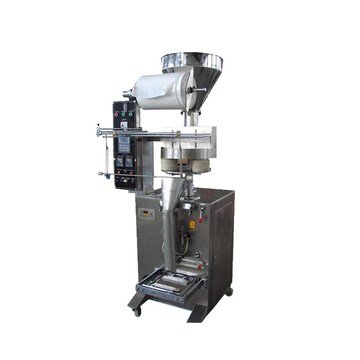
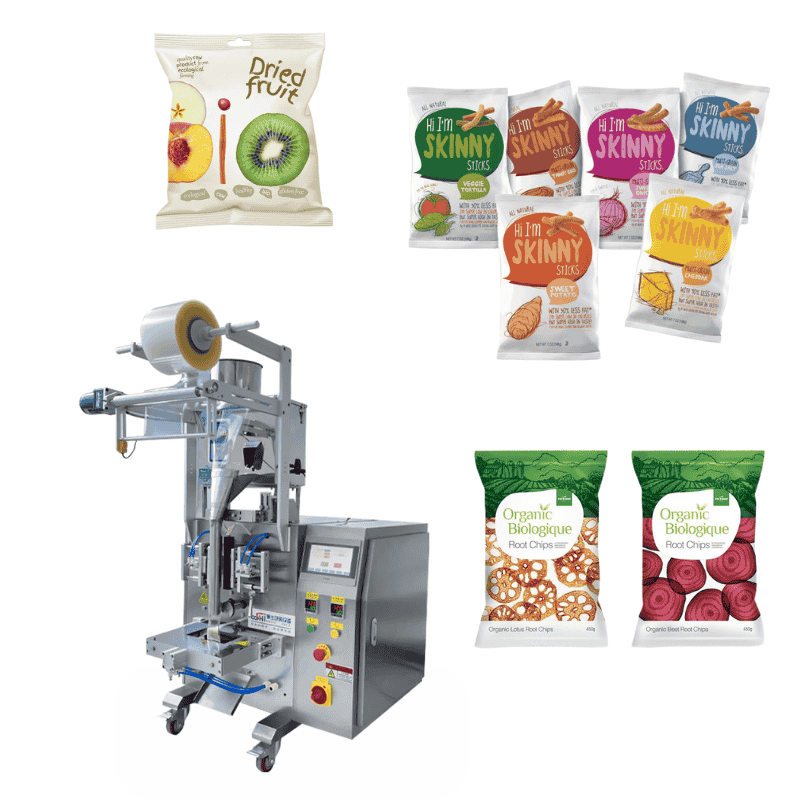
An automatic pouch packing machine fills and seals packaging automatically. Depending on the model, it can handle premade pouches or form pouches from a packaging film roll.
Some machines include weighing systems, filling units, sealing stations and date-coding arrangements.
Suitable products:
- Dried mango
- Dried pineapple
- Dried apple
- Raisins
- Dates
- Dried papaya
- Mixed dried fruits
Advantages:
- Faster production.
- Consistent pouch formation and sealing.
- Reduced manual handling.
- Suitable for growing businesses.
- Can be integrated with automatic weighing equipment.
Limitations:
- Higher initial investment.
- Requires suitable machine settings for different product sizes.
- Some products may need special feeding arrangements to prevent breakage.
For businesses planning regular production and retail distribution, automatic pouch systems can be a valuable investment.
3. Multihead Weigher Packaging Machine
A multihead weigher is a high-speed weighing system commonly used in commercial and industrial food packaging.
It contains multiple weighing heads that calculate combinations of product weights to achieve the target package quantity.
The machine is often integrated with a vertical form-fill-seal or premade pouch packing system.
Suitable products:
- Raisins
- Dried cranberries
- Dried blueberries
- Dried banana chips
- Nuts
- Mixed dry fruits
- Small dried fruit pieces
Advantages:
- High production speed.
- Accurate portion control.
- Reduced product giveaway.
- Suitable for large-scale production.
- Can be integrated with automated packaging lines.
Limitations:
- Higher capital investment.
- Requires skilled installation and setup.
- Irregularly shaped or sticky products may need specialized feeding and weighing configurations.
A multihead weigher is particularly useful for manufacturers supplying supermarkets, distributors and large retail chains.
4. Vacuum Packaging Machine
A vacuum packaging machine removes air from a package before sealing it.
Reducing oxygen exposure can help slow oxidation and protect suitable products during storage. However, vacuum packaging is not suitable for every dried fruit because delicate slices can become crushed or deformed.
Suitable products:
- Dried dates
- Figs
- Prunes
- Raisins
- Certain dried fruit mixes
- Bulk dried fruit products
Advantages:
- Reduces air inside the package.
- Can help protect products from oxidation.
- Provides compact packaging.
- Useful for bulk and wholesale products.
Limitations:
- May crush fragile dried fruits.
- Requires packaging material compatible with vacuum sealing.
- Does not replace proper moisture control or food-safety practices.
For fragile products, modified-atmosphere or nitrogen-flushed packaging may be more appropriate.
5. Nitrogen Flushing Packaging Machine
Nitrogen flushing replaces much of the air inside a package with food-grade nitrogen before sealing.
It is commonly used for products that benefit from reduced oxygen exposure, including certain dried fruits, nuts and snack products.
Suitable products:
- Dried apple
- Dried mango
- Dried strawberries
- Dried cranberries
- Mixed dried fruits
- Nuts and fruit snack mixes
Advantages:
- Reduces oxygen exposure.
- Can help slow oxidation.
- Helps protect flavour and colour in suitable products.
- Useful for premium retail packaging.
- Supports certain longer-distribution supply chains when validated.
Limitations:
- Requires a nitrogen supply and suitable gas-flushing equipment.
- Adds operating and packaging costs.
- Requires proper sealing and residual oxygen control.
- Does not compensate for poor product quality or unsuitable moisture levels.
Nitrogen flushing can be integrated into automatic pouch packing systems.
6. Continuous Band Sealing Machine
A continuous band sealer closes prefilled pouches by moving them through heated sealing belts.
It is commonly used by small and medium food-processing businesses.
Suitable products:
- Dried banana
- Dried mango
- Raisins
- Dates
- Dried pineapple
- Mixed fruit packs
Advantages:
- Simple operation.
- Suitable for continuous pouch sealing.
- Lower investment than many fully automatic packaging lines.
- Available in different configurations.
- Useful for different pouch materials, subject to machine compatibility.
Limitations:
- Does not automatically weigh or fill products.
- Requires an operator to feed packages.
- Sealing quality depends on correct temperature, speed and pressure settings.
A continuous band sealer can be a practical choice for businesses that already have a separate weighing and filling arrangement.
7. Jar and Bottle Filling Machine
Some dried fruit businesses prefer rigid containers instead of flexible pouches.
A jar filling machine dispenses dried fruits into plastic, glass or other suitable containers. The system may be combined with a capping, induction sealing or labelling machine.
Suitable products:
- Premium dried fruit assortments
- Dates
- Dried berries
- Dried mango
- Mixed fruit and nut products
Advantages:
- Premium retail appearance.
- Convenient storage and reuse.
- Suitable for gift packs and specialty products.
- Can support premium positioning.
Limitations:
- Containers may cost more than pouches.
- Storage and transport may require more space.
- Additional capping and labelling equipment may be needed.
3. Best Packaging Machines for Dried Fruit Businesses: Price Comparison in India
Packaging machine prices vary according to automation, production speed, weighing accuracy, construction quality, packaging format and additional features.
The following figures are indicative planning ranges for the Indian market, not verified live supplier quotations.
Estimated Packaging Machine Prices
| Packaging machine | Indicative price range |
|---|---|
| Manual heat sealing machine | ₹2,000–₹10,000 |
| Continuous band sealer | ₹10,000–₹45,000 |
| Semi-automatic weighing and filling machine | ₹40,000–₹2,00,000 |
| Semi-automatic pouch packing system | ₹75,000–₹3,00,000 |
| Automatic pouch packing machine | ₹2,00,000–₹8,00,000 |
| Vacuum packaging machine | ₹25,000–₹3,00,000+ |
| Nitrogen flushing packaging system | ₹1,50,000–₹8,00,000+ |
| Multihead weigher with packing line | ₹8,00,000–₹30,00,000+ |
| Jar filling and capping system | ₹1,00,000–₹10,00,000+ |
Prices can differ significantly depending on whether the equipment is manual, semi-automatic or fully automatic.
A complete packaging line may also require a conveyor, weighing system, metal detector, checkweigher, date coder, nitrogen supply, labelling machine and other accessories.
Before purchasing, ask manufacturers to provide a detailed quotation covering machine specifications, installation, commissioning, taxes, warranty and after-sales service.
4. Which Packaging Machine Is Best for Different Dried Fruits?
Different products have different physical properties. Some are sticky, some are fragile, and others contain natural oils that require additional protection.
| Dried fruit product | Suitable packaging equipment |
|---|---|
| Dried mango | Pouch packing machine with suitable weighing system |
| Dried banana | Weighing filler and pouch sealer |
| Dried pineapple | Automatic pouch packing machine |
| Dried apple | Nitrogen flushing pouch system where required |
| Raisins | Multihead weigher or semi-automatic filler |
| Dates | Pouch filler or vacuum system where suitable |
| Dried figs | Gentle filling and pouch sealing equipment |
| Dried cranberries | Multihead weigher and nitrogen flushing option |
| Dried apricots | Semi-automatic or automatic pouch packing machine |
| Mixed dried fruits | Multihead weigher with suitable feeding arrangement |
The final choice should be confirmed through product trials. Sticky fruits, large pieces and delicate slices may require special product-contact surfaces, feeding systems and filling settings.
5. Best Packaging Materials for Dried Fruits
The packaging material is as important as the machine itself.
A suitable packaging film should provide the required moisture barrier, oxygen barrier, mechanical strength and sealing performance.
1. Stand-Up Pouches
Stand-up pouches are popular for retail dried fruit products because they provide good shelf presentation and can include resealable zippers.
Applications:
- Dried mango
- Dried pineapple
- Raisins
- Mixed fruit snacks
2. Laminated Pouches
Laminated packaging combines multiple material layers to provide selected barrier and strength properties.
Depending on the structure, it can protect dried fruits from moisture, oxygen and light.
3. Aluminium Foil Laminated Pouches
Aluminium foil laminates can provide strong light, moisture and oxygen barriers when properly designed and sealed.
They are often used for products requiring enhanced protection during storage and distribution.
4. Metallized Pouches
Metallized films provide a reflective barrier layer and are used in many snack and dried food packages.
Their barrier performance varies according to film structure and thickness.
5. Food-Grade Plastic Containers
Rigid containers can protect products from crushing and offer convenient retail presentation.
They are useful for premium products and gift packaging.
6. Glass Jars
Glass jars provide an attractive presentation and can be suitable for premium dried fruit products.
However, they are heavier and more fragile than flexible pouches.
Important Packaging Considerations
Choose packaging based on:
- Moisture vapour transmission rate.
- Oxygen transmission rate.
- Light protection.
- Seal strength.
- Puncture resistance.
- Food-contact compliance.
- Storage temperature and humidity.
- Expected distribution conditions.
Do not select packaging material based only on appearance or price. Ask the supplier for barrier specifications and conduct shelf-life validation using the actual product.
6. Important Features to Look for When Buying a Dried Fruit Packaging Machine
Before investing in equipment, compare the technical specifications carefully.
1. Production Capacity
Check the number of packs the machine can produce per minute or hour.
Ask whether the stated capacity is based on your actual product, pouch size and target weight.
2. Weighing Accuracy
Accurate filling helps reduce product giveaway and maintain package consistency.
Check the machine’s stated accuracy under real operating conditions.
3. Adjustable Pouch Sizes
Choose a machine that supports the packaging sizes required by your business.
For example, you may need 50 g, 100 g, 250 g, 500 g and 1 kg packs.
4. Sealing Quality
Strong and consistent seals are essential for protecting dried fruits.
Check the sealing mechanism, temperature adjustment, pressure settings and compatibility with packaging materials.
5. Food-Grade Construction
Product-contact components should be made from suitable food-contact materials, such as appropriate grades of stainless steel.
Ask the supplier for material specifications and relevant compliance documentation.
6. Easy Cleaning
Dried fruit particles, sugar and sticky residues can accumulate in filling systems.
Choose equipment with accessible product-contact areas and a practical cleaning procedure.
7. Automation Level
Select between manual, semi-automatic and fully automatic equipment based on your production target and labour availability.
8. Spare Parts and Technical Support
A low-cost machine may become expensive if spare parts and maintenance support are difficult to obtain.
Check the availability of local service technicians and replacement components.
7. Small-Scale vs Industrial Packaging Machines
Not every dried fruit manufacturer needs a large automated packaging line.
The correct machine depends on the quantity of product you intend to package.
Small-Scale Packaging Setup
Suitable for startups, home-based manufacturers and small food businesses.
Typical equipment:
- Digital weighing scale.
- Semi-automatic filling machine.
- Manual or continuous band sealer.
- Batch coding machine.
- Basic labelling equipment.
Benefits:
- Lower investment.
- Simple operation.
- Flexible packaging quantities.
- Suitable for product testing.
Medium-Scale Packaging Setup
Suitable for growing businesses supplying retail shops, online customers and local distributors.
Typical equipment:
- Automatic weighing system.
- Semi-automatic or automatic pouch packing machine.
- Continuous sealing system.
- Date coding machine.
- Checkweigher where required.
Benefits:
- Improved production efficiency.
- More consistent filling.
- Reduced manual handling.
- Better packaging presentation.
Industrial Packaging Setup
Suitable for large manufacturers, contract packers and export-oriented food businesses.
Typical equipment:
- Multihead weigher.
- Automatic form-fill-seal machine.
- Nitrogen flushing system where required.
- Conveyor system.
- Metal detector.
- Checkweigher.
- Automatic labelling and coding equipment.
Benefits:
- High production capacity.
- Better process standardization.
- Reduced manual handling.
- Integration with larger manufacturing lines.
8. How Much Does It Cost to Set Up a Dried Fruit Packaging Business?
The total setup cost depends on whether you purchase only packaging equipment or establish a complete manufacturing operation.
A packaging-only business may purchase dried fruits in bulk and focus on weighing, packing, branding and distribution.
A manufacturing business may also require fruit washing, cutting, drying, sorting, grading and storage equipment.
Illustrative Packaging Setup Budgets
| Business scale | Indicative equipment budget |
|---|---|
| Small packaging setup | ₹50,000–₹2,00,000 |
| Medium packaging setup | ₹2,00,000–₹8,00,000 |
| Advanced packaging line | ₹8,00,000–₹20,00,000 |
| Industrial packaging facility | ₹20,00,000+ |
These are broad planning estimates, not supplier quotations. Actual costs depend on the selected machines and production specifications.
Other expenses may include:
- Premises and utilities.
- Raw dried fruits.
- Packaging film and pouches.
- Labour.
- Product testing.
- Branding and design.
- Licences and registrations.
- Storage and distribution.
- Working capital.
For a business operating in India, review applicable FSSAI licensing and food labelling requirements before commercial production. Exporters should also check destination-market requirements.
9. How to Improve Profitability with the Right Packaging Machine
Packaging efficiency can directly affect business margins.
Reduce Product Giveaway
Accurate weighing prevents excess product from being added to each pouch.
Even a small reduction in overfilling can create meaningful savings when thousands of packages are produced.
Reduce Packaging Waste
Proper machine settings can reduce film wastage, rejected pouches and sealing defects.
Improve Labour Productivity
Automation can reduce repetitive manual tasks and allow employees to focus on quality control and production supervision.
Introduce Multiple Package Sizes
Offer different pack sizes to serve retail customers, wholesalers, hotels and food manufacturers.
Develop Premium Product Lines
Resealable pouches, attractive labels and suitable barrier materials can support premium dried fruit products.
Reduce Product Returns
Reliable seals, accurate weights and suitable packaging barriers can help reduce quality complaints and product damage.
10. Common Mistakes to Avoid When Buying Packaging Machines
Avoid these mistakes before making a purchase:
- Buying a machine without checking actual production capacity.
- Selecting equipment that cannot handle sticky or fragile products.
- Ignoring packaging film compatibility.
- Choosing a machine based only on the lowest price.
- Not checking filling accuracy.
- Ignoring cleaning and sanitation requirements.
- Underestimating maintenance and spare-part costs.
- Purchasing an oversized machine before demand is established.
- Failing to conduct product trials.
- Not checking warranty and after-sales support.
A machine demonstration using your own dried fruit product is one of the most useful steps before finalizing an order.
11. How to Select a Reliable Packaging Machine Manufacturer
A dependable supplier can make equipment ownership easier and reduce unexpected production interruptions.
Before selecting a manufacturer, check:
- Experience in food packaging machinery.
- Product-specific machine demonstrations.
- Technical specifications and documented performance.
- Food-contact material details.
- Installation and commissioning services.
- Warranty terms.
- Spare-part availability.
- Customer references.
- Operator training.
- After-sales support.
Ask the manufacturer to test your product at the intended pack weight and pouch size. Record the production speed, filling accuracy, rejected-pack rate and sealing quality.
Compare quotations using the same specifications so you can evaluate suppliers fairly.
12. Frequently Asked Questions
1. Which packaging machine is best for dried fruits?
The best option depends on production volume and product type. Small businesses can begin with a weighing and filling machine plus a band sealer. Larger manufacturers may prefer automatic pouch packing machines with multihead weighers.
2. What is the price of a dried fruit packaging machine in India?
Basic sealing machines may cost a few thousand rupees, while automatic pouch packing systems can cost several lakh rupees. Industrial packaging lines can cost substantially more. Prices depend on capacity, automation and specifications.
3. Is a vacuum packaging machine suitable for dried fruits?
Vacuum packaging can be suitable for some dried fruits, particularly products that can tolerate compression. Fragile fruit slices may require alternative packaging methods.
4. What is nitrogen flushing in food packaging?
Nitrogen flushing replaces much of the air inside a package with food-grade nitrogen before sealing. It can reduce oxygen exposure and help preserve quality in suitable products.
5. Which packaging material is best for dried fruits?
Laminated pouches, metallized films and aluminium foil laminates can provide useful moisture and oxygen barriers. The best choice depends on the product, shelf-life target and storage conditions.
6. Can one machine pack different dried fruits?
Many machines can handle multiple products, but sticky, fragile and irregularly shaped fruits may require different feeding arrangements and settings. Confirm compatibility with the supplier.
7. What is the best packaging machine for a small dried fruit business?
A digital weighing scale, semi-automatic filling machine and continuous band sealer can provide a practical starting setup.
8. How many packs can an automatic packaging machine produce per hour?
Production depends on machine design, pouch size, product characteristics, filling method and operator efficiency. Ask the supplier for a product-specific production demonstration rather than relying only on maximum advertised speed.
9. Do dried fruits need airtight packaging?
Dried fruits generally benefit from properly sealed packaging with suitable moisture and oxygen barriers. The exact packaging requirement depends on the product’s moisture level, water activity and intended shelf life.
10. Is a multihead weigher worth the investment?
A multihead weigher can be valuable for businesses handling large production volumes. It can improve weighing speed and portion consistency, but its cost may not be justified for small-scale operations.
Conclusion
Choosing the best packaging machines for dried fruit businesses is an important step toward building an efficient and competitive food-processing operation.
Small businesses can begin with semi-automatic weighing and sealing equipment, while growing manufacturers may benefit from automatic pouch packing systems. Large-scale operations can consider multihead weighers, nitrogen flushing, conveyors and integrated packaging lines.
The ideal machine should match your product type, production capacity, packaging format, budget and quality requirements.
Before investing, compare machine prices, weighing accuracy, production speed, sealing quality, packaging compatibility, maintenance costs and supplier support. A well-planned packaging system can reduce waste, improve productivity, protect product quality and support long-term growth in the dried fruit industry.