dried-kiwi-benefits-nutrition-price.png
Dried Kiwi: Benefits, Nutrition, Uses, Price and Buying Guide
What Is Dried Kiwi?
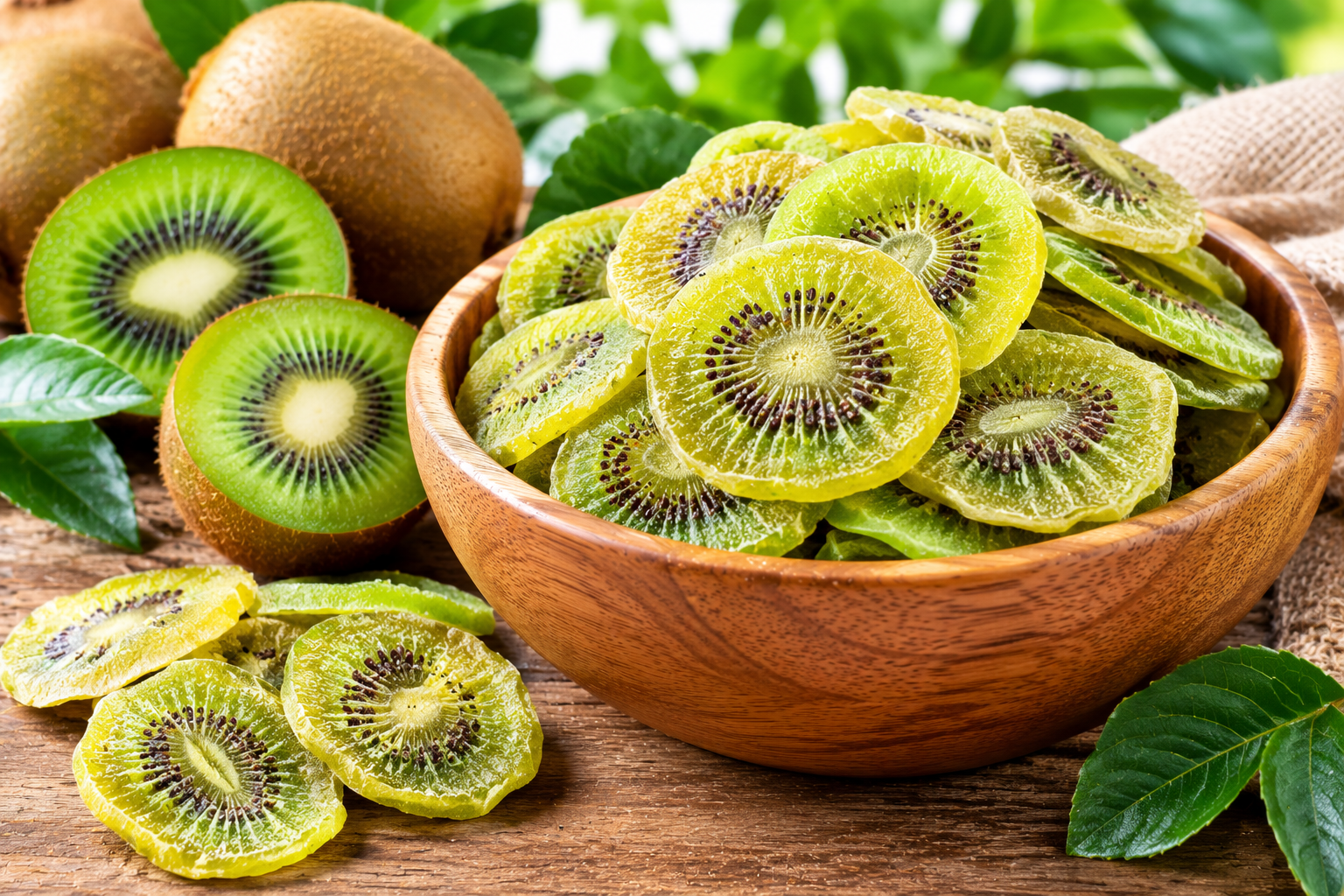
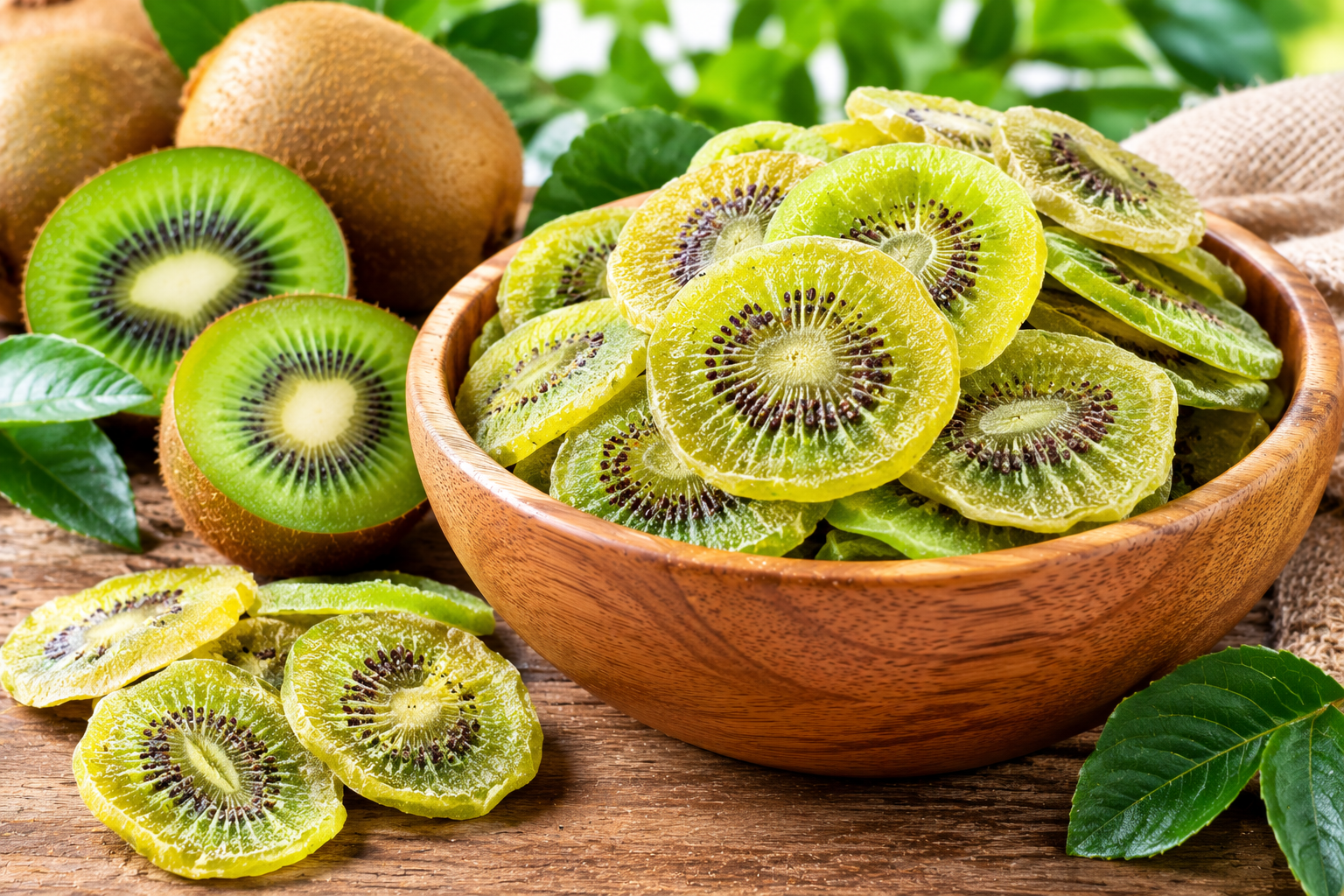
Dried kiwi is made by removing most of the moisture from fresh kiwi fruit. This process creates a delicious, tangy and convenient fruit snack that can be stored longer than fresh kiwi when properly processed and packaged.
Dried kiwi is available in different forms, including dried kiwi slices, kiwi chips, diced kiwi, freeze-dried kiwi and kiwi powder.
It is becoming popular among consumers looking for convenient fruit snacks and food manufacturers using fruit ingredients in cereals, granola, smoothies, bakery products and confectionery.
Depending on the processing method, dried kiwi can have a chewy, crispy or slightly crunchy texture.
Nutritional Value of Dried Kiwi
Kiwi fruit naturally contains vitamin C, dietary fiber, potassium and various antioxidant compounds.
During dehydration, much of the water is removed, making nutrients and natural sugars more concentrated per 100 grams compared with fresh kiwi.
The nutritional composition depends on the kiwi variety, drying method and whether sugar or other ingredients have been added.
When purchasing dried kiwi, check:
- Calories per serving
- Total and added sugars
- Dietary fiber
- Vitamin C content
- Potassium content
- Ingredient list and serving size
Nutrition tip: Choose unsweetened dried kiwi if you want to avoid additional sugar. Always compare nutrition labels before purchasing.
Top 6 Benefits of Dried Kiwi
1. Rich in Vitamin C
Kiwi fruit is naturally rich in vitamin C, which supports normal immune function, collagen formation and protection of cells from oxidative stress. The amount retained depends on the drying process.
2. Supports Digestive Health
Dried kiwi can provide dietary fiber, which supports normal digestion and bowel function. The fiber content varies by product and serving size.
3. Contains Antioxidants
Kiwi contains naturally occurring antioxidant compounds, including vitamin C and polyphenols. These compounds help protect cells from oxidative damage.
4. Provides Convenient Energy
Dried kiwi contains carbohydrates that provide energy. Its lightweight and portable form makes it convenient for travel, work and outdoor activities.
5. Supports a Balanced Diet
Dried kiwi provides fruit-derived nutrients and can be included in a balanced eating pattern. It is a convenient ingredient for snack mixes, cereals and breakfast foods.
6. Versatile Food Ingredient
Dried kiwi has a distinctive tangy flavor and attractive green color. It can be used in bakery products, desserts, snack bars, smoothies and commercial food formulations.
Important: Dried kiwi contains concentrated natural sugars compared with fresh kiwi. Check for added sugar and enjoy appropriate portions.
Types of Dried Kiwi Products
1. Dried Kiwi Slices
Circular kiwi slices with visible seeds and a chewy texture. They are popular for snacking, garnishing and breakfast products.
2. Dried Kiwi Chips
Thin slices processed to create a crispier texture. They are suitable for snack packs and retail products.
3. Freeze-Dried Kiwi
Kiwi processed through freezing and low-pressure drying. This method creates a lightweight, crisp product that is popular in premium snacks and food ingredients.
4. Diced Dried Kiwi
Small pieces used in granola, cereals, trail mixes, bakery products and snack bars.
5. Kiwi Powder
A powdered kiwi ingredient used in smoothies, beverage mixes, bakery products and selected food formulations.
6. Unsweetened Dried Kiwi
Made without added sugar, allowing the natural tangy flavor of kiwi to stand out.
Dried Kiwi vs. Fresh Kiwi
| Feature | Dried Kiwi | Fresh Kiwi |
|---|---|---|
| Water content | Lower | Higher |
| Texture | Chewy or crispy | Juicy and soft |
| Calories per 100 g | More concentrated | Generally lower |
| Portability | Very convenient | More delicate |
| Storage | Often longer when properly packaged | More perishable |
| Common uses | Snacks, baking and cereals | Fresh eating, salads and smoothies |
Both dried and fresh kiwi can be included in a balanced diet. The best choice depends on your dietary preferences and intended use.
How to Use Dried Kiwi
Dried kiwi is a versatile ingredient for home kitchens and commercial food production.
Here are some popular ways to use it:
- Add dried kiwi slices to oatmeal and breakfast cereals.
- Mix kiwi pieces with nuts and seeds for trail mix.
- Add dried kiwi to yogurt and granola.
- Blend kiwi powder into smoothies.
- Use kiwi slices as dessert and cake toppings.
- Add diced kiwi to muffins and cookies.
- Mix dried kiwi into homemade energy bars.
- Use freeze-dried kiwi in premium snack blends.
For commercial applications, manufacturers should check moisture specifications, ingredient composition and suitability for the intended food product.
Dried Kiwi Price: What Affects the Cost?
The price of dried kiwi depends on the processing method, product quality, country of origin, packaging and order quantity.
Several factors influence the price:
1. Processing Method: Freeze-dried kiwi may cost more than conventionally dried kiwi because of its specialized production process.
2. Raw Material Quality: Kiwi variety, ripeness, size and sourcing affect the finished product.
3. Product Form: Whole slices, diced kiwi, chips and kiwi powder have different processing requirements.
4. Ingredients: Added sugar, preservatives and other ingredients can influence the final cost.
5. Packaging: Retail pouches, resealable bags and bulk food-grade packaging have different costs.
6. Order Quantity: Wholesale buyers may receive different pricing depending on order volume.
7. Transportation: Shipping, storage and handling expenses contribute to the final delivered price.
For accurate pricing, request quotations from several suppliers and compare price per kilogram, product specifications, packaging and shipping costs.
How to Choose High-Quality Dried Kiwi
Before purchasing dried kiwi, consider these important factors:
- Check the ingredients: Look for products that match your preference for added sugar and preservatives.
- Inspect the appearance: Choose products with a natural appearance appropriate to their drying method.
- Check the texture: Select chewy or crispy varieties according to your needs.
- Review packaging: Choose sealed, food-grade packaging that protects the product from moisture.
- Check the expiry date: Review the best-before date and storage recommendations.
- Compare nutrition labels: Check calories, fiber and added sugar.
- Request samples: Commercial buyers should evaluate flavor, texture, appearance and consistency before purchasing in bulk.
Buying Dried Kiwi in Bulk or Wholesale
Dried kiwi is used by food manufacturers, retailers, snack brands, bakeries and ingredient distributors.
Businesses looking for dried kiwi wholesale suppliers should compare quality, pricing, product specifications and delivery conditions.
Before placing a bulk order, ask suppliers about:
- Minimum order quantity (MOQ)
- Price per kilogram at different volumes
- Country of origin
- Available kiwi varieties and product formats
- Slice thickness and moisture specifications
- Added sugar and ingredient information
- Packaging sizes and private-label options
- Shelf life and storage conditions
- Relevant food safety certifications
- Sample availability
- Shipping costs and delivery time
For importers and food manufacturers, calculate the total delivered cost rather than comparing only the product price.
Dried Kiwi Business Opportunities
Dried kiwi offers opportunities for entrepreneurs and businesses interested in fruit snacks, food ingredients and wholesale distribution.
1. Packaged Dried Kiwi Snacks
Develop retail snack packs for supermarkets, specialty food stores and online marketplaces.
2. Freeze-Dried Kiwi Products
Supply lightweight fruit ingredients to premium snack brands and food manufacturers.
3. Kiwi Powder Manufacturing
Produce kiwi powder for smoothie brands, beverage manufacturers and bakery businesses.
4. Wholesale Distribution
Supply dried kiwi to retailers, bakeries, restaurants and food processing companies.
5. Private-Label Dried Kiwi
Create branded dried kiwi products for businesses that want to sell under their own brand name.
6. Food Ingredient Supply
Supply dried kiwi slices and pieces to cereal manufacturers, confectionery companies and snack producers.
Businesses planning their own production facility should research raw material availability, processing costs, equipment requirements, packaging expenses, labor and applicable food safety regulations.
Commercial Fruit Dehydrator Machine: What to Consider
For businesses interested in producing dried kiwi, investing in suitable drying equipment is an important decision.
Before purchasing a commercial fruit dehydrator machine, compare:
- Drying capacity per batch
- Electricity consumption
- Temperature control
- Drying time
- Uniformity of drying
- Food-grade construction
- Maintenance requirements
- Spare parts availability
- Manufacturer warranty
- After-sales service
Businesses producing freeze-dried kiwi should also compare commercial freeze dryer machines and their operating costs.
Request detailed quotations and product demonstrations before making an investment.
Frequently Asked Questions
Is dried kiwi healthy?
Dried kiwi can be included in a balanced diet. It provides fiber and fruit-derived nutrients, but portion size matters because natural sugars and calories are concentrated by weight.
Does dried kiwi contain added sugar?
Some products contain added sugar, while others do not. Always check the ingredient list and nutrition label.
Is freeze-dried kiwi better than regular dried kiwi?
They have different textures and processing methods. Freeze-dried kiwi is generally crisp and lightweight, while conventional dried kiwi is often chewy.
How long does dried kiwi last?
Shelf life depends on moisture content, processing, packaging and storage. Follow the manufacturer’s best-before date and storage instructions.
Where can I buy dried kiwi in bulk?
Potential sources include dried-fruit processors, exporters, freeze-dried fruit manufacturers, food ingredient distributors and private-label suppliers.
What is kiwi powder used for?
Kiwi powder can be used in smoothies, beverage mixes, bakery products, desserts and selected food formulations.
Can dried kiwi be made at home?
Yes. Kiwi slices can be dried using suitable food-dehydration equipment or an oven following a reliable food-drying method. Proper drying and storage are essential for product quality.
Conclusion
Dried kiwi is a versatile tropical-style fruit snack with a distinctive tangy flavor, attractive appearance and several food applications.
Whether you are looking for dried kiwi slices for personal use, freeze-dried kiwi for premium snacks, kiwi powder for food production or bulk kiwi ingredients for your business, comparing product quality, ingredients and supplier specifications is important.
For business buyers: Request samples and detailed quotations from multiple suppliers before placing a bulk order.